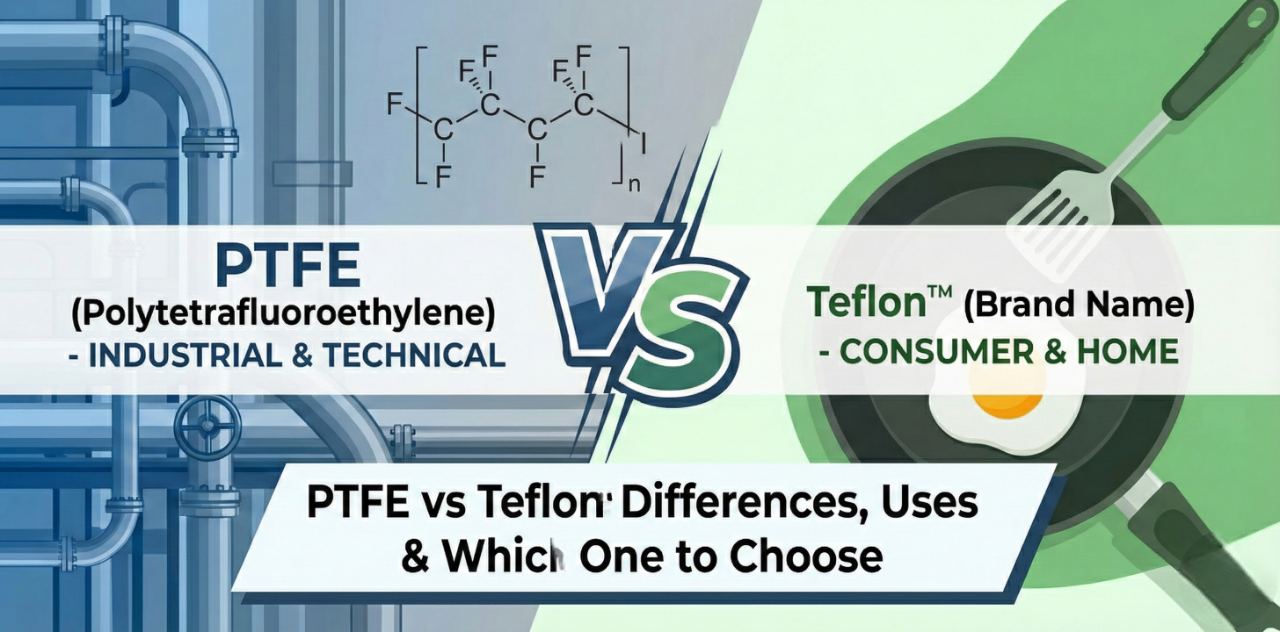
PTFE and Teflon are the same material chemically.
PTFE (Polytetrafluoroethylene) is the generic polymer, while Teflon® is a trademarked brand name used for PTFE-based products.
All Teflon is PTFE, but not all PTFE can be called Teflon.
PTFE (Polytetrafluoroethylene) is a synthetic fluoropolymer known for:
Extremely low coefficient of friction
Outstanding chemical resistance
High temperature stability (up to ~260°C)
Non-reactive, non-stick surface
Excellent electrical insulation
PTFE is widely used in:
Food and pharmaceutical equipment
PTFE is the globally accepted technical term used in datasheets, standards, and procurement documents.
Teflon® is a registered trademark, originally developed by DuPont and now owned by Chemours.
Only licensed manufacturers can legally use the name Teflon®.
Important clarification:
Teflon is not a different material
It is PTFE sold under a brand name
Using “Teflon” in technical specs without licensing is usually incorrect.
| Feature | PTFE | Teflon® |
|---|---|---|
| Type | Generic material | Brand name |
| Chemical structure | Polytetrafluoroethylene | Polytetrafluoroethylene |
| Performance | Identical | Identical |
| Trademark restrictions | No | Yes |
| Use in specifications | Preferred | Limited |
| Cost | Generally lower | Often higher |
| SEO value | High | Medium |
Both PTFE and Teflon share the same molecular structure:
Strong carbon–fluorine bonds
High chemical inertness
Thermal stability
Non-stick behavior
If two products are made from the same PTFE grade, performance will be identical, regardless of branding.
Catheter liners
Guidewire sleeves
Medical tubing
Heat exchanger liners
PTFE is used because it is biocompatible, smooth, and low-friction, reducing tissue damage and improving device performance.
PTFE-lined pipes
Gaskets and seals
Valves and fittings
Chemical transfer hoses
PTFE protects equipment from corrosion, scaling, and chemical attack.
Wire and cable insulation
High-frequency components
Semiconductor manufacturing
Non-stick cookware
Bearings and slide plates
(These often use the Teflon® brand for marketing.)
Choose PTFE if you are:
Writing technical or engineering specifications
Manufacturing medical or industrial products
Sourcing from multiple suppliers
Optimizing for SEO and AI visibility
Looking for cost-effective, standards-compliant materials
PTFE is the correct term for B2B, OEM, and export markets.
Teflon® may be relevant if:
Branding is important (consumer products)
You are using licensed Teflon coatings
A customer explicitly requests the Teflon trademark
For most industrial use cases, Teflon branding is unnecessary.
Neither is better — they are the same material.
The real difference is:
PTFE → technical accuracy, flexibility, SEO strength
Teflon® → brand recognition, trademark value
For engineering, manufacturing, and medical applications, PTFE is the better choice.
PTFE and Teflon are often confused, but the distinction is simple:
PTFE is the material
Teflon is the name
Understanding this helps buyers, engineers, and marketers:
Avoid overpaying
Write accurate specifications
Rank better in search and AI answers
Make informed sourcing decisions