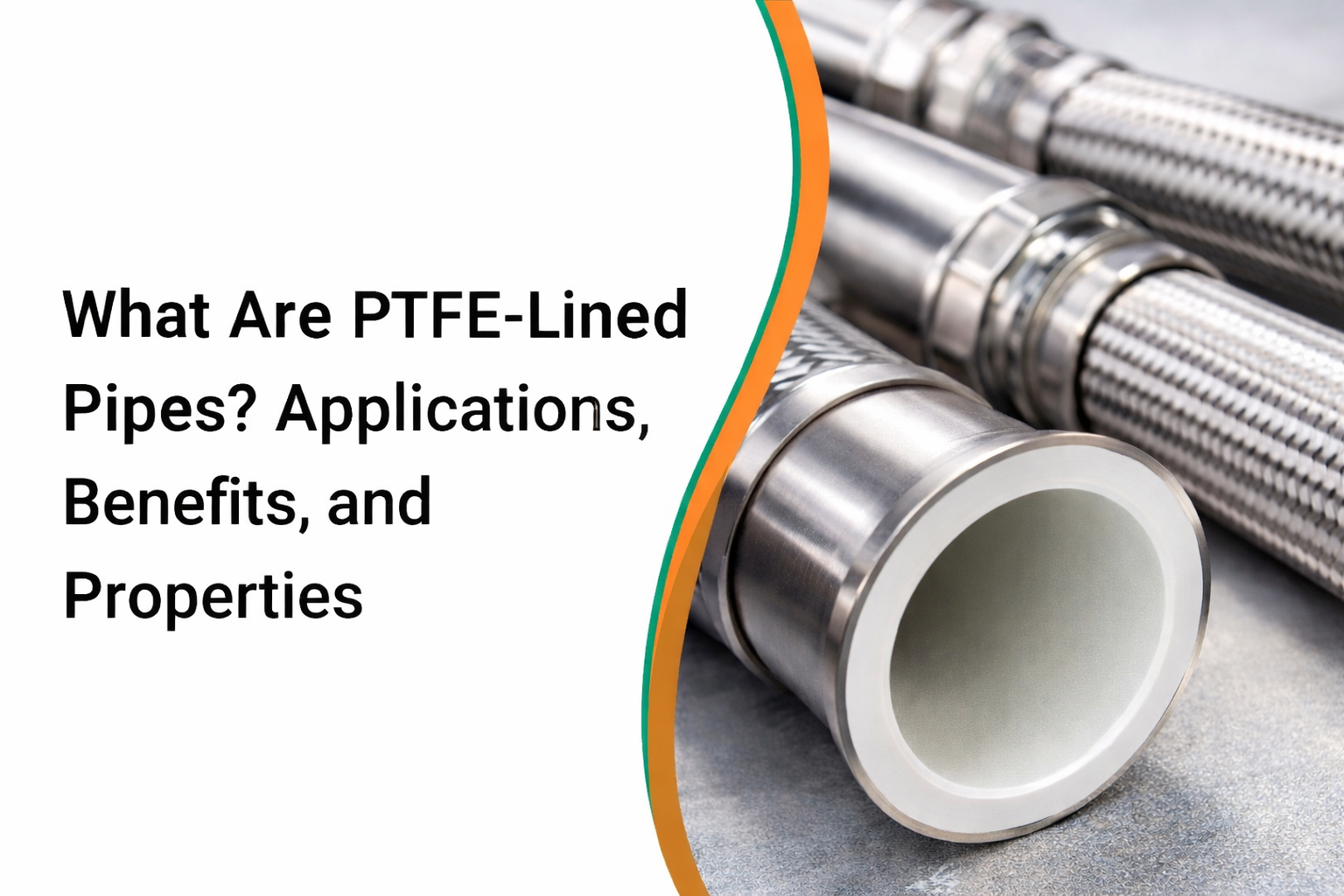
PTFE (polytetrafluoroethylene) lined pipes are industrial piping systems featuring a metal outer shell—typically carbon steel or stainless steel—with an interior lining of PTFE, commonly known as Teflon™. This dual-layer construction combines the mechanical strength of metal with the exceptional chemical resistance and non-stick properties of PTFE.
The PTFE lined pipes market was valued at USD 1.8 billion in 2024 and is projected to reach USD 2.93 billion by 2032, growing at a CAGR of 6.3%, reflecting increasing industrial demand for reliable, corrosion-resistant piping solutions.
In industries handling corrosive chemicals, aggressive acids, or high-purity substances, traditional piping materials often fail prematurely. PTFE lined pipes solve these challenges by creating an inert barrier that delivers:
PTFE exhibits unparalleled resistance to strong acids (sulfuric, nitric, hydrochloric), bases (sodium hydroxide, potassium hydroxide), organic solvents, and oxidizing agents. The material operates reliably from cryogenic temperatures to 260°C continuous use, with short-term exposure up to 300°C.
Outer Shell: Carbon steel (ASTM A106 Gr-B) or stainless steel (304L, 316L) PTFE Liner Thickness: 2-6mm depending on application Pressure Ratings: Class 150 to Class 300 (ANSI B16.5) Standard Sizes: 1″ to 24″ (DN 25 to DN 600)
Carbon Steel Lined Pipes Most economical option for standard applications. Requires external coating to prevent atmospheric corrosion but offers excellent value for general industrial use in chemical processing, petrochemical facilities, and water treatment.
Stainless Steel Lined Pipes Premium option providing superior aesthetics with no external coating required. While initial cost is higher, these are cost-effective over their lifespan, reducing the need for frequent replacements and requiring less maintenance. Ideal for pharmaceutical, food processing, and high-purity applications.
Paste Extruded Liners Typical preformed PTFE pipe linings are available in sizes from 2 to 6 inches, offering smooth internal surfaces and excellent permeation resistance. For straight pipe sections and standard fittings in diameters up to 8 inches, PTFE-lined options can pose a more economical choice.
Rotational Lining The process bonds the fluoropolymer to the substrate, leaving no space between liner and substrate, eliminating the need for weep holes. Best suited for large diameter pipes (8+ inches) where premolded liner availability decreases and costs rise.
The Chemical Industry segment dominates with approximately 38% market share and 4.9% CAGR. PTFE lined pipes handle aggressive chemicals, acids, alkalis, solvents, and corrosive media in chlor-alkali processing, VCM production, titanium dioxide refining, and pesticide manufacturing.
MS PTFE-lined pipes transport acids, alkalis, and reactive chemicals while maintaining product purity. They offer exceptional thermal resistance for handling high-temperature fluids like steam and hot water, plus cryogenic capability. FDA 21 CFR 177.1550 compliance and USP Class VI certification ensure regulatory compliance.
Oil & Gas applications hold 32% market share with 5.1% CAGR, serving crude oil processing, natural gas treatment, refinery operations, desulfurization systems, and sour gas handling where H2S corrosion resistance is critical.
More than 42% of wastewater treatment plants in the U.S. have upgraded to PTFE-lined systems due to their ability to withstand chlorine and chlor-alkali treatments. Applications include chlorine dosing, pH adjustment, chemical distribution, and membrane cleaning systems.
Ultra-high purity requirements make PTFE essential for parts-per-trillion contamination control in etchant delivery, photoresist supply, and deionized water systems.
Always handle PTFE lined pipes carefully using soft slings—avoid dropping or dragging as the PTFE lining is delicate and can get damaged. Check pipes and fittings for any cracks, damage, or lining issues before installation.
Alignment & Assembly: Make sure pipes and flanges are aligned well before tightening. Always tighten bolts in a cross pattern to ensure even pressure and protect the PTFE lining from stress and cracking.
Torque Specifications: Over-tightening may crush the PTFE lining and lead to leakage. Use recommended torque values ranging from 40-50 ft-lbs for 1/2″-1″ pipes to 250-350 ft-lbs for 10″-12″ pipes.
Welding Restrictions: Avoid welding near PTFE lined pipes as heat can damage the lining. Maintain minimum 12″ distance and use heat shields to protect the liner.
Thermal Expansion: PTFE has a high coefficient of thermal expansion (10-14 × 10⁻⁵ /°C). Install expansion joints every 30-50 feet for applications with major temperature changes.
Regular visual inspection identifies cracks, scratches, or discoloration that may indicate underlying issues. Perform annual hydrostatic testing at 1.25× operating pressure and spark testing (10-15 kV DC) to detect pinholes or liner defects.
Flange Leakage: Re-torque bolts following proper sequence, replace gaskets, and verify alignment.
Liner Delamination: New bonding techniques introduced in 2024 reduced delamination events by nearly 40%. Implement gradual temperature changes and install surge protection devices.
External Corrosion: Apply corrosion-inhibiting coatings and consider upgrading to stainless steel in harsh environments.
While initial cost is higher than carbon steel, PTFE-lined systems deliver superior long-term value:
20-Year TCO Example (100 feet of 6″ pipe):
PTFE lined pipes reduce leakage risk by nearly 70% compared to unlined carbon steel pipes and extend operational lifespan by approximately 45%. Adoption continues to rise as industries demand longer-life systems that minimize infrastructure downtime and maintenance frequency by nearly 30% annually.
Payback Periods:
More than 7,200 tons of PTFE materials were used in 3D printer filament production globally in 2023, with industry uptake increasing by 17.8%, enabling rapid prototyping and custom solutions.
New bonding techniques and AI integration in manufacturing provide enhanced quality control, optimized processes, and defect reduction. The market continues expanding with strongest growth in Asia-Pacific due to rapid industrialization.
The European Chemicals Agency’s 2025 draft restriction on PFAS threatens broad classes of fluoropolymers unless exemptions for essential uses are retained. Major processors respond by launching PFAS-compliant product lines while advocating for critical-use exemptions in chemical processing, pharmaceutical manufacturing, and semiconductor fabrication where no viable alternatives exist.
PTFE lined pipes represent a proven solution for handling challenging industrial fluids. With the market projected to reach USD 2.93 billion by 2032, adoption continues accelerating across industries recognizing the value proposition.
Choose PTFE Lined Pipes When:
While initial investment is higher than alternatives, the combination of extended service life (20-30+ years), reduced maintenance (30% lower costs), enhanced safety (70% leakage reduction), and energy efficiency (5-15% savings) delivers compelling return on investment for industrial operations.
Q: What chemicals can PTFE lined pipes handle?
PTFE is compatible with virtually all industrial chemicals including strong acids, bases, solvents, and oxidizers across the entire pH range (0-14).
Q: How long do PTFE lined pipes last?
Typically 20-30+ years in proper service conditions, 30-50% longer than alternative materials.
Q: What sizes are available?
Standard sizes range from 1″ to 24″ (DN 25 to DN 600), with larger custom sizes available.
Q: Can PTFE lined pipes be welded?
No, all connections are made through flanged joints. Welding on the outer pipe must maintain at least 12″ distance from the liner.
Q: What maintenance is required?
Minimal compared to alternatives: regular visual inspections, periodic gasket replacement, and standard pressure testing.