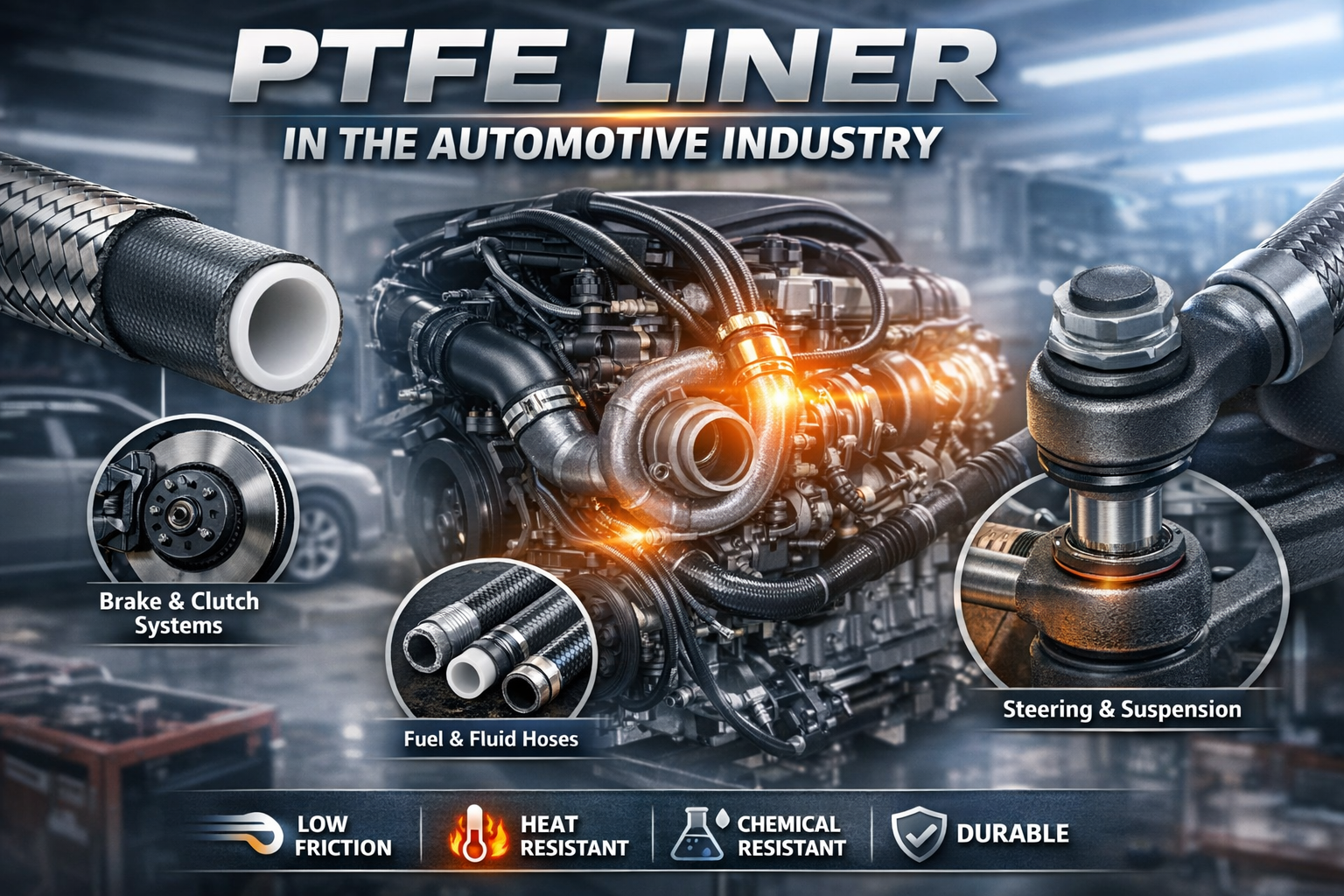
The automotive industry is constantly evolving, driven by the need for higher efficiency, durability, and safety. One material that has quietly but powerfully contributed to this progress is the ptfe liner. Found in critical vehicle systems, this advanced lining material helps reduce friction, withstand extreme temperatures, and improve overall performance.
As modern vehicles become more complex, manufacturers rely on materials that can handle demanding conditions without frequent maintenance. This is where the ptfe liner stands out as a reliable and high-performing solution.
A ptfe liner is a lining made from polytetrafluoroethylene, a synthetic fluoropolymer known for its exceptional non-stick, low-friction, and heat-resistant properties. It is commonly used inside hoses, bearings, cables, and mechanical components.
PTFE is composed of carbon and fluorine atoms, creating strong molecular bonds. This structure gives the material:
Extremely low coefficient of friction
High resistance to chemicals
Excellent thermal stability
Non-reactive and non-toxic behavior
Automotive environments involve heat, pressure, vibration, and chemical exposure. A ptfe liner performs well under all these conditions, making it an ideal choice for long-term reliability.
The ptfe liner plays a crucial role in improving vehicle efficiency and reliability by minimizing wear and tear in moving parts.
Low friction means less energy loss. When components move smoothly, engines and mechanical systems operate more efficiently. PTFE-lined parts help improve fuel efficiency and reduce mechanical stress.
Automotive systems often face extreme temperatures. A ptfe liner can withstand temperatures up to 260°C (500°F) without losing performance, making it suitable for high-heat zones.
In brake hoses and clutch cables, a ptfe liner ensures smooth fluid transfer and precise control. It also improves response time and safety.
Fuel systems demand chemical resistance and leak prevention. PTFE-lined hoses resist fuel additives and corrosive fluids, ensuring consistent flow and safety.
Steering cables and suspension bushings benefit from PTFE liners by reducing friction and eliminating stick-slip motion, which enhances driving comfort.
Components with a ptfe liner last longer due to reduced wear. This durability lowers replacement frequency and downtime.
By minimizing friction and uneven movement, PTFE liners help reduce noise and vibration, improving the overall driving experience.
Compared to rubber, nylon, or metal linings, a ptfe liner offers:
Lower friction than rubber
Higher temperature tolerance than nylon
Corrosion resistance superior to metal
These benefits make PTFE a preferred choice in modern automotive design.
PTFE liners support sustainability by extending component life and reducing waste. They are also non-toxic and safe for use in vehicles, contributing to cleaner and safer automotive systems.
For more technical insights into fluoropolymer materials, you can explore this resource from DuPont: https://www.dupont.com
Although PTFE-lined components may have a slightly higher upfront cost, they reduce long-term expenses by:
Lower maintenance needs
Fewer failures
Improved system efficiency
Over time, a ptfe liner proves to be a cost-effective investment.
With the rise of electric vehicles and advanced driver-assistance systems, the demand for lightweight, durable, and low-friction materials is growing. The ptfe liner is expected to play an even bigger role in EV cooling systems, battery components, and precision control mechanisms.
A ptfe liner offers lower friction, higher temperature resistance, and longer service life than rubber.
Yes, it is non-toxic, chemically inert, and widely used in critical vehicle systems.
Absolutely. PTFE liners perform well under both high pressure and high temperature.
It is used in brake hoses, fuel lines, clutch cables, steering systems, and bearings.
Indirectly, yes. Reduced friction means less energy loss and improved system efficiency.
No. They typically require less maintenance due to their durability and wear resistance.
The ptfe liner has become an essential material in the automotive industry due to its unmatched performance, durability, and versatility. From brake systems to fuel lines, it enhances efficiency, safety, and comfort in modern vehicles. As automotive technology continues to advance, the role of PTFE liners will only grow stronger, making them a smart and future-ready choice for manufacturers and consumers alike.