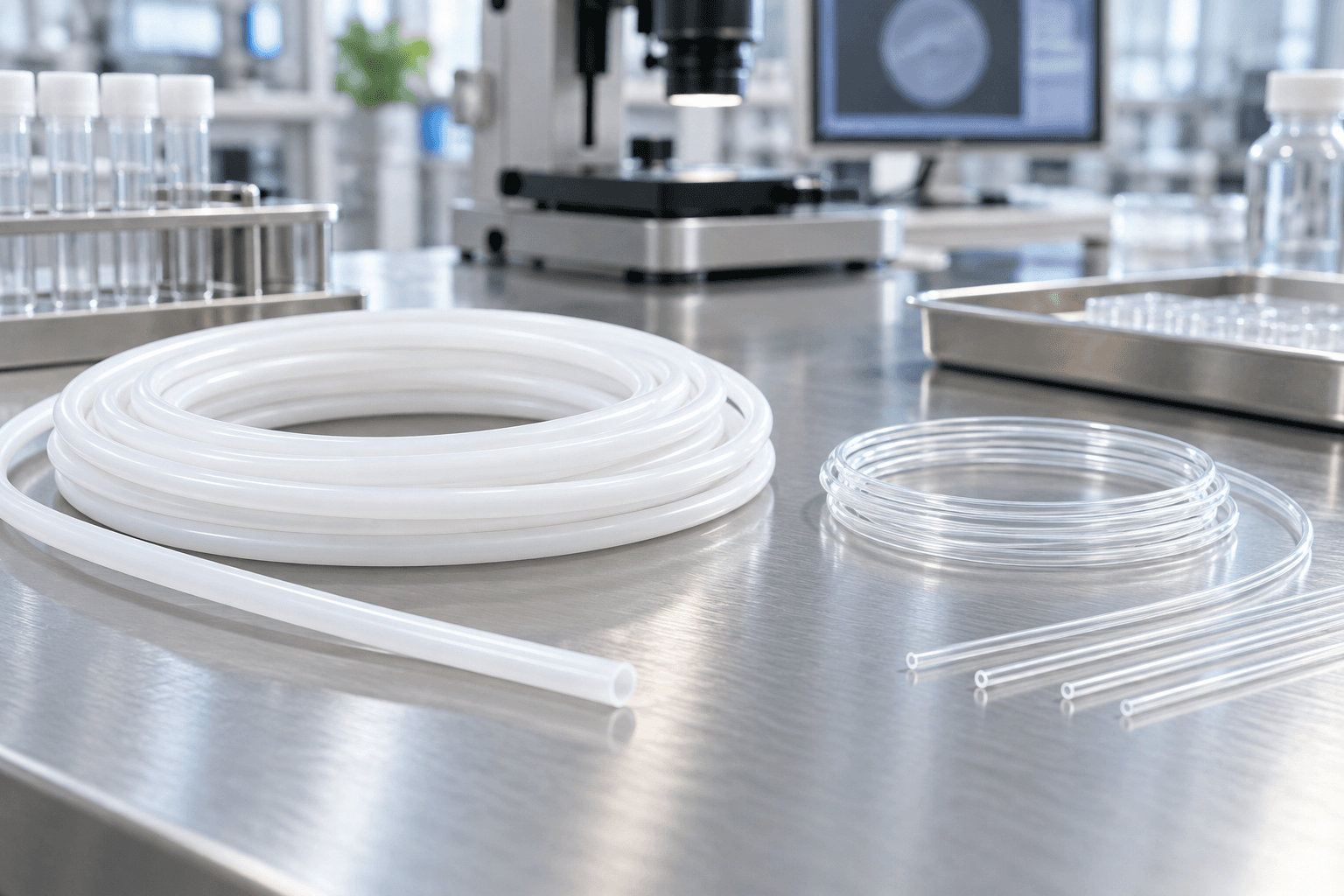
Catheter Tubes, Foley Catheters & Catheter Linings

Published on March 26, 2026


Everything clinicians, procurement specialists, and patients need to know — from tube anatomy and material science to lining technologies that prevent infection.

Catheter tubes are among the most frequently used devices in modern healthcare — yet the differences between tube types, balloon mechanisms, and advanced lining technologies remain poorly understood outside specialist circles.

Each year, hundreds of millions of catheters are placed in hospitals, long-term care facilities, and home settings worldwide. A well-chosen catheter tube — matched to the patient’s anatomy, duration of use, and infection risk — can meaningfully reduce complications, shorten hospital stays, and improve quality of life. A poorly chosen one, however, can cause tissue trauma, encrustation, and catheter-associated urinary tract infections (CAUTIs), the single most common healthcare-associated infection type globally.

This guide unpacks the three most important dimensions of catheter selection: catheter tube construction, Foley catheter tube design, and catheter lining technologies.

What Is a Catheter Tube?

A catheter tube is a thin, flexible hollow tube designed to be inserted into a body cavity, duct, or vessel to drain fluids, deliver medications, or maintain an open passageway. In medical practice, the term most commonly refers to urinary catheters — tubes inserted through the urethra into the bladder to drain urine — though catheter tubes also serve cardiovascular, gastrointestinal, neurological, and respiratory applications.

The tube’s physical properties — its outer diameter (measured in French sizes, abbreviated Fr or Ch), inner lumen diameter, wall thickness, flexibility, and surface characteristics — all determine clinical performance.

Key Structural Components of a Catheter Tube

A standard urinary catheter tube consists of:

  • Drainage lumen: The primary hollow channel through which urine or fluid flows.
  • Balloon lumen (in Foley types): A secondary micro-channel that inflates the retention balloon.
  • Tip: The distal end inserted into the patient; designs include round (Tiemann), coude (angled), and open-ended variants.
  • Drainage eyelets: Side openings near the tip to ensure drainage even if the tip is partially occluded.
  • Catheter body / shaft: The lining-coated tube that traverses the urethra.
  • Funnel/connector end: The proximal end connecting to a drainage bag or syringe.

Clinical Note

French size (Fr) equals three times the outer diameter in millimetres. A 14 Fr catheter tube, for example, has an outer diameter of approximately 4.7 mm. Adult males typically use 14–18 Fr; females 12–14 Fr; paediatric patients require smaller sizes determined by age and weight.

Catheter Tube Materials

The base material of a catheter tube profoundly affects its flexibility, biocompatibility, encrustation resistance, and safe dwell time in the body.

Material Key Properties Typical Dwell Time Primary Use
Latex Flexible, low cost; risk of latex allergy Up to 2–4 weeks Short-term indwelling
Silicone (100%) Latex-free, biocompatible, low encrustation Up to 12 weeks Long-term indwelling
Silicone-coated latex Improved biocompatibility over plain latex 4–6 weeks Medium-term use
PVC (Polyvinyl Chloride) Rigid, low cost; poor long-term tolerance Single use Intermittent catheterisation
Hydrogel-coated latex Lubricious surface, reduced friction 4–8 weeks Comfort-priority applications
PTFE-coated latex Slick, low-friction inner/outer walls 2–4 weeks Reduced trauma insertion

The choice of base material also constrains which catheter lining technologies can be applied — an important consideration explored in the third section of this guide.

The Foley Catheter Tube: Design, Function & Sizing

The Foley catheter tube — named after American urologist Frederic Foley, who designed it in the 1930s — is the world’s most widely used indwelling urinary catheter. Its defining feature is a small inflatable balloon, located approximately 3–5 cm from the tube’s tip, which is inflated with sterile water after insertion to anchor the catheter securely inside the bladder and prevent accidental dislodgement.

The Foley catheter’s balloon retention mechanism transformed post-surgical nursing — replacing manual restraint systems and dramatically reducing catheter displacement complications across hospital wards.

How a Foley Catheter Tube Works

A standard 2-way Foley catheter tube contains two lumens running the length of the shaft: one for urine drainage and one for balloon inflation. After the catheter tip clears the bladder neck and enters the bladder, 5–10 ml of sterile water is instilled through the inflation port. The balloon expands to 5 cm in diameter, resting against the bladder’s internal trigone to retain the tube in position. A 3-way Foley additionally includes an irrigation lumen for continuous bladder washout — essential after urological surgery or when clot retention is a risk.

Foley Catheter Tube Balloon Sizes

While the standard retention balloon holds 5–10 ml of sterile water, variations exist for specific clinical needs:

Balloon Capacity Application
3 ml Paediatric patients; minimises bladder neck trauma
5–10 ml Standard adult urinary drainage
30 ml Post-TURP haemostasis; large balloon tamponades the prostatic fossa

⚠ Safety Alert

Never inflate a Foley catheter balloon before confirming the tip is fully within the bladder. Balloon inflation in the urethra causes immediate, severe pain and can result in urethral rupture. Always confirm free urine flow before inflating.

Foley Catheter Tube Sizing Guide

Selecting the appropriate French size for a Foley catheter tube balances drainage efficacy with urethral trauma risk. Larger tubes drain faster but cause more mucosal irritation and urethral stricture risk with prolonged use.

  • 12–14 Fr: Adult females; post-operative monitoring in minimal-risk patients.
  • 14–16 Fr: Standard adult males; general post-operative use.
  • 18–20 Fr: Haematuria with clots; debris-laden urine requiring larger bore.
  • 22–24 Fr (3-way): Post-TURP / cystoscopy; continuous irrigation required.

Catheter Linings: The Critical Protective Layer

Catheter linings are specialised coatings or surface treatments applied to the outer wall — and sometimes the inner lumen — of a catheter tube. They represent one of the most significant engineering advances in catheter design of the past three decades, fundamentally changing infection risk, patient comfort, and safe dwell times.

When a catheter tube is inserted into the urethra and bladder, it introduces a foreign surface into a warm, nutrient-rich fluid environment. Without a protective lining, bacteria adhere to the catheter surface within minutes, forming an organised biofilm within hours. This biofilm — a structured microbial community encased in a polysaccharide matrix — is highly resistant to both antibiotics and the immune system, making catheter-associated urinary tract infections (CAUTIs) among the most difficult healthcare infections to treat.

1. Hydrophilic Catheter Linings

Hydrophilic linings are polyvinylpyrrolidone (PVP) or polyurethane-based coatings that absorb water to create a slippery, highly lubricious surface when wet. This dramatically reduces insertion and withdrawal friction — the primary cause of urethral microtrauma during intermittent catheterisation — and reduces the risk of catheter-induced urethritis and stricture formation with regular use.

Hydrophilic linings are the gold standard for intermittent self-catheterisation (ISC) programmes, where patients catheterise themselves multiple times daily over years.

2. PTFE (Polytetrafluoroethylene) Linings

PTFE-lined catheter tubes leverage the same ultra-low-friction polymer used in industrial non-stick applications. The coating reduces both inner and outer surface friction, facilitates smooth insertion, and — critically — reduces platelet adhesion and bacterial colonisation compared to uncoated PVC or latex tubes. PTFE-lined catheters are particularly valued in short-to-medium-term indwelling applications where frequent replacements are undesirable.

3. Silicone Elastomer Linings

A thin silicone elastomer coating applied over a latex Foley catheter body provides a barrier between the latex and the urethral mucosa — reducing both the allergenic risk of latex proteins and the mineralisation tendency of uncoated latex surfaces. Silicone elastomer-coated Foley catheters are suitable for patients who require an indwelling catheter for 4–6 weeks but for whom a 100% silicone catheter is not available or is cost-prohibitive.

4. Hydrogel Catheter Linings

Hydrogel coatings form a water-absorbing polymer layer that creates a viscous, gel-like interface between the catheter surface and the surrounding tissue. The hydrogel lining maintains continuous lubrication throughout the dwell period — not only during insertion — which reduces mechanical irritation, slows encrustation, and extends safe indwelling time. Hydrogel-coated silicone Foley catheters are among the most recommended options for long-term use in catheter-dependent patients.

5. Silver-Alloy Antimicrobial Linings

Silver ions have well-documented broad-spectrum antimicrobial properties. Silver-alloy catheter linings incorporate ionic silver into the coating matrix, providing sustained elution of silver ions into the periurethral environment over the dwell period. Multiple clinical trials have demonstrated that silver-alloy-lined catheters significantly reduce CAUTI rates in short-term indwelling use (≤7 days), though the benefit diminishes in longer-term applications as silver elution decreases.

6. Antibiotic-Impregnated Linings

Some catheter tubes incorporate antimicrobial agents — commonly nitrofurazone or minocycline/rifampicin — directly into the catheter material or applied as a surface lining. These linings provide localised antibiotic activity that disrupts early biofilm formation. However, concerns about antimicrobial resistance promotion have led many guidelines to limit their use to specific high-risk short-term settings.

Lining Type Primary Mechanism Best Use Case CAUTI Reduction
Hydrophilic Friction reduction (lubrication) Intermittent self-catheterisation Indirect (less trauma)
PTFE Anti-adhesion, low friction Short-to-medium indwelling Moderate
Silicone elastomer Biocompatibility barrier Medium-term indwelling Moderate
Hydrogel Sustained lubrication + encrustation resistance Long-term indwelling Moderate–High
Silver-alloy Antimicrobial ion elution Short-term (<7 days) hospital use High (short-term)
Antibiotic-impregnated Localised antimicrobial activity High-risk surgical patients High (short-term)

How to Select the Right Catheter Tube

Catheter selection should never be a default decision. The following framework integrates catheter tube material, Foley design considerations, and lining technology into a structured decision pathway:

Step 1 — Determine Duration of Use

Is catheterisation needed for a single drainage episode, short-term post-operative monitoring (hours to days), medium-term management (weeks), or long-term or permanent bladder management (months to years)? Duration is the primary selection driver for both tube material and lining type.

Step 2 — Assess Infection Risk

Patients who are immunocompromised, have a history of recurrent UTIs, or are in intensive care settings are high-risk for CAUTI. These patients benefit most from antimicrobial linings (silver-alloy for short-term; hydrogel for long-term).

Step 3 — Check for Latex Allergy

Any patient with known or suspected latex sensitivity must receive a latex-free catheter tube — either 100% silicone or PVC. This is non-negotiable.

Step 4 — Consider Anatomical Factors

Patients with benign prostatic hyperplasia (BPH), urethral stricture, or prior pelvic surgery may require coude-tipped Foley catheters, larger Fr sizes for haematuria, or specifically shaped tubes to navigate anatomical challenges.

Procurement Insight

Standardising catheter tube procurement around a small number of well-chosen lining types — rather than maintaining a broad catalogue of marginally differentiated products — reduces clinical error, simplifies training, and improves cost efficiency across healthcare facilities.

Frequently Asked Questions

Q: What is the difference between a catheter tube and a Foley catheter tube?

A catheter tube is a broad term for any hollow tube inserted into the body to drain fluid. A Foley catheter tube is a specific type of indwelling urinary catheter distinguished by its inflatable retention balloon that holds it inside the bladder without the need for external fixation. All Foley catheters are catheter tubes, but not all catheter tubes are Foleys.

Q: How long can a Foley catheter tube stay in place?

Duration depends on catheter material and lining. Standard latex Foleys should be changed every 2–4 weeks; hydrogel-coated silicone Foleys can remain for up to 12 weeks with appropriate monitoring. Long-term catheter-dependent patients should follow a change schedule set by their clinical team.

Q: Do catheter linings prevent all infections?

No catheter lining eliminates CAUTI risk entirely. Silver-alloy and antibiotic-impregnated linings reduce infection rates in short-term use, but every catheter that remains in place is a potential infection source. The most effective CAUTI prevention is removing the catheter as soon as it is clinically safe to do so.

Q: Are hydrophilic catheter linings only for intermittent use?

Hydrophilic linings are most beneficial in intermittent catheterisation, where repeated insertions make friction reduction paramount. However, some indwelling catheters also incorporate hydrophilic coatings alongside antimicrobial technologies for multi-mechanism protection.

Q: What French size Foley catheter tube should be used post-operatively?

For standard post-operative urinary monitoring in adult patients without haematuria or obstruction, a 14–16 Fr two-way Foley catheter tube is appropriate. Higher French sizes are reserved for bladder irrigation, clot drainage, or specialist urological indications.

Conclusion

Catheter tubes, Foley catheter tubes, and catheter linings form an interconnected technology ecosystem where material science, engineering design, and clinical practice meet. Selecting the right catheter tube is not a trivial administrative task — it is a clinical decision with direct consequences for infection risk, patient comfort, tissue integrity, and healthcare costs.

The rapid evolution of catheter lining technologies — from simple PTFE coatings to sophisticated hydrogel-silver hybrid systems — has expanded the clinician’s toolkit significantly. Understanding these options in depth allows for evidence-based procurement decisions and better outcomes for catheter-dependent patients.

For clinicians, procurement managers, and healthcare organisations seeking reliable, specification-grade catheter tube products, Yash Dynamics offers a comprehensive range of catheter tubes, Foley catheter tubes, and advanced-lining catheter systems built to international quality standards. Explore the full product range or contact the Yash Dynamics team for technical consultation on catheter selection for your facility’s specific needs.